
Quick Answer
The Leupold VX-3HD 3.5-10x40 with the FireDot Twilight Hunter reticle is the best illuminated reticle scope for most hunters. Its lit dot turns down low enough for the last minutes of light, and a motion sensor shuts it off when the rifle sits still. If you never want to rely on a battery, get the Trijicon AccuPoint 2.5-10x56.
An illuminated reticle earns its place in two moments: the last minutes of legal light, when plain black wire melts into the shadow on a deer's shoulder, and fast close shots, when your eye needs a bright point to find. The trouble is that those two jobs want opposite things. Dusk wants a dot you can turn down to a faint glow, and daylight wants one bright enough to beat the sun.
Most buyers judge a lit scope by how bright it gets in the store, and that is the wrong test. The settings that matter on a deer stand are the lowest two or three, and the thing that ruins a dusk shot is a reticle so bright it lights up the whole tube and hides the animal. Second on my list is the power: a dot that drains its battery in the safe is worse than no dot at all.
My Top Picks
6 picks
Leupold VX-3HD 3.5-10x40
I put it first because it handles both of the things that go wrong with lit hunting scopes. The dot turns down to a soft glow for dusk, and the motion sensor keeps a forgotten switch from killing the battery.

Trijicon AccuPoint 2.5-10x56
This is my pick for the stand hunter who is done with batteries. Fiber and tritium light the dot with no switch at all, and the big objective stays bright at full power when the light fades.
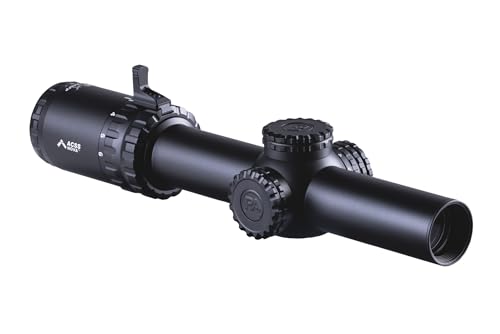
Primary Arms SLx 1-6x24
Most lit scopes fade in noon sun. This one uses a fiber wire bright enough to act like a red dot at 1x, which is what a carbine or ranch rifle needs for fast shots.

Athlon Ares BTR 4.5-27x50
A first focal plane reticle shrinks to a thin line at low power. Lighting the center of it is what keeps this long-range scope usable on a dim low-power shot.

Burris Fullfield 2.5-10x42
It lights only the center of the reticle and leaves the holdover marks black, which is the right call on a budget deer scope. It also fits ordinary 1 inch rings.

Vortex Crossfire HD 2-7x32
For a lever gun or brush rifle, I want a small scope that sits low. This one does, and the lit floating dot gives your eye a fast point in dark timber.
On this page
- Illuminated Reticle Scopes Compared
- The 6 Best Illuminated Reticle Scopes
- 1. Leupold VX-3HD 3.5-10x40
- 2. Trijicon AccuPoint 2.5-10x56
- 3. Primary Arms SLx 1-6x24
- 4. Athlon Ares BTR 4.5-27x50
- 5. Burris Fullfield 2.5-10x42
- 6. Vortex Crossfire HD 2-7x32
- Getting a Lit Reticle to Help Instead of Hurt
- Frequently Asked Questions
- Final Verdict
Illuminated Reticle Scopes Compared
| Leupold VX-3HD 3.5-10x40 | LED, push button | Yes, motion sensor | Center dot | Dawn and dusk |
| Trijicon AccuPoint 2.5-10x56 | Fiber and tritium | No battery to drain | Center dot | Dusk, open stands |
| Primary Arms SLx 1-6x24 | LED fiber wire, dial | No | Center aiming point | Full daylight |
| Athlon Ares BTR 4.5-27x50 | LED, dial | No | Center of the tree | Shade and dusk |
| Burris Fullfield 2.5-10x42 | LED, dial | No | Center only | Dawn and dusk |
| Vortex Crossfire HD 2-7x32 | LED, dial | No | Floating center dot | Dark timber |
The 6 Best Illuminated Reticle Scopes
If you hunt deer at the edges of the day, your choice is between the first two: a battery dot that manages itself, or no battery at all. The Primary Arms is the one for bright daylight and carbines, the Athlon is for long-range rifles, and the last two are the budget and brush answers.
1. Leupold VX-3HD 3.5-10x40
The FireDot puts light into one small dot where the posts meet and leaves the rest of the reticle black. That is the layout I want on a deer scope, because the dot gives your eye a point at last light without throwing glow across the picture. On its lowest settings it is a faint red point that sits on a dark shoulder without hiding it. I'd set it there before the evening sit and leave it.
The feature that makes this my first pick is the motion sensor. Leupold's VX-3HD 3.5-10x40 FireDot says it shuts the dot off after a few minutes without movement and turns it back on the moment the rifle moves. A forgotten switch is the most common way a lit scope ends up dead on opening morning, and this one solves it without you thinking about it.
The same sensor has a side you should know about on a stand. If the rifle rests across your lap or on a rail long enough, the dot goes to sleep. It wakes as soon as you lift the rifle, so it is not a real problem, but I would not be surprised by a dark reticle the first time I shoulder it after a long wait. The other side is a truck: a rifle riding on a rough road keeps moving, so the sensor keeps it awake. I'd switch it off by hand before a long drive.
The single button cycles through the brightness steps in order, which is slow with gloves on. That is another reason I'd pick the setting before the sit instead of hunting for it with a deer in front of me. You also get the CDS-ZL locking elevation dial and a fixed parallax set for big-game distances, which suits a rifle that gets zeroed and carried, not one that shoots small targets close.
Key Specs
- Magnification
- 3.5 to 10x
- Objective
- 40 mm
- Tube
- 30 mm
- Focal plane
- SFP
- Eye relief
- 3.6 to 4.4 in
- Weight
- 15.8 oz
What Stands Out
- Motion sensor saves the battery
- Center-only dot that turns down very low
- Locking elevation dial
Real Trade-Offs
- One button, slow to change in gloves
- Dot sleeps if the rifle sits still
- Fixed parallax, no close focus
My verdict
For most deer and elk hunters, this is the lit scope that is always on when you need it and never glaring when the light goes.
2. Trijicon AccuPoint 2.5-10x56
No battery, no switch, no circuit, and that is the whole case I'd make for it. A fiber strip on the eyepiece gathers daylight and feeds the dot, and a tritium lamp takes over when the light is gone. I like this system for one reason above the others: there is nothing to forget and nothing to freeze. The dot is simply there when you shoulder the rifle.
The fiber also changes the brightness for you. In strong light it glows brighter, and as the sun drops it fades with the background, which is close to what you would do by hand with a dial. When snow or sun makes it flare, a shutter over the strip turns it down. The one place it fails is a dark blind facing a bright field. The collector sits in shade, the tritium alone is too faint against the sunlit target, and the dot all but vanishes. On an open stand you rarely see that.
The cost of the big objective is size. It needs high rings, it raises your head off the comb, and the eye relief shortens noticeably at the top of the range. Ring height, cheek weld and eye relief each get a full section where I cover the AccuPoint 2.5-10x56 in depth, and I'd read that before ordering rings. A rifle that gets carried far is the wrong home for it, to my mind; it belongs on a stand.
Key Specs
- Magnification
- 2.5 to 10x
- Objective
- 56 mm
- Tube
- 30 mm
- Focal plane
- SFP
- Eye relief
- 2.8 to 4.1 in
- Weight
- 20.7 oz
What Stands Out
- Lit dot with no battery at all
- Bright at full power in fading light
- Shutter tames the dot in snow
Real Trade-Offs
- Needs high rings and a riser on many stocks
- Eye relief short at 10x
- Washes out from dark blinds
My verdict
If you hunt dawn and dusk from open stands and never want to touch a battery cap, this is worth the tall rings.
3. Primary Arms SLx 1-6x24
Most etched reticles fade to a faint tint in bright sun, which is useless at 1x. Primary Arms runs its LED light into a fiber wire instead, and Primary Arms rates it as bright as a red dot. That is the reason I'd pick it for a carbine: with the zoom all the way down and both eyes open, you want a dot that jumps out against bright dirt or snow, and this one does.
The ACSS Nova reticle has holds drawn for 5.56 and .308, and since it sits in the second focal plane, those marks are only true at 6x. For a hog carbine inside 200 yards I'd mostly use the center dot and treat the rest as a bonus. My one complaint is the dial. It has to go back to zero to switch off, so you spin it down after each use instead of clicking one step. The Primary Arms SLx reticle is something I break down at more length.
Key Specs
- Magnification
- 1 to 6x
- Objective
- 24 mm
- Tube
- 30 mm
- Focal plane
- SFP
- Eye relief
- 4.0 in
- Weight
- 17.9 oz
What Stands Out
- Dot bright enough for noon sun
- Fast at 1x with both eyes open
- Many brightness steps to choose from
Real Trade-Offs
- Small objective, weak at deep dusk
- Off only at the end of the dial
- Holds true at 6x only
4. Athlon Ares BTR 4.5-27x50
A first focal plane reticle grows and shrinks with the zoom. At the bottom of the range, the lines get thin enough to vanish against dark brush, and that is the problem illumination solves on this scope. Turn it on, and the center of the tree glows so you can still aim on a low-power shot in the evening. I'd treat it as a contrast tool for shade and dusk, not a daylight beacon: etched lighting is soft in bright sun.
I like how Athlon handles the dial. Its Ares BTR Gen 3 manual shows an off position between each brightness number, so you can switch it off with one click and back on to the same level. On a precision rifle that gets carried to a stand, that is the right way to save a battery. The Ares BTR turrets and glass are where I spend more words, and I think they matter more than the lighting for most buyers of this scope.
Key Specs
- Magnification
- 4.5 to 27x
- Objective
- 50 mm
- Tube
- 30 mm
- Focal plane
- FFP
- Eye relief
- 3.9 in
- Weight
- 27.3 oz
What Stands Out
- Lit tree stays visible at low power
- Off positions between every step
- Side focus for close targets
Real Trade-Offs
- Heavy for a carry rifle
- Soft illumination in bright sun
- No automatic shutoff
5. Burris Fullfield 2.5-10x42
Plenty of budget lit scopes light up the whole reticle, and at dusk that turns the picture into a red fog. The Fullfield lights only the center of the Ballistic E3 and leaves the drop marks black, which is exactly what I'd want for a deer stand. Those marks are drawn for an average centerfire load, so I'd check them at real distances before trusting them past 200 yards.
The catch is mounting. The scope is short, so there is not much tube to clamp on either side of the turret. On a long action with separate bases, the rings may not land where you need them, and the Fullfield's short tube is why I'd use a one-piece base there. There is no auto-off, so turn the dial off by hand when you climb down.
Key Specs
- Magnification
- 2.5 to 10x
- Objective
- 42 mm
- Tube
- 1 in
- Focal plane
- SFP
- Eye relief
- 3.9 to 4.1 in
- Weight
- 15.4 oz
What Stands Out
- Only the center lights up
- Fits ordinary 1 inch rings
- Generous eye relief
Real Trade-Offs
- Short tube limits ring spacing
- No automatic shutoff
- Holdover marks need checking
6. Vortex Crossfire HD 2-7x32
I don't like a big objective bell on a lever gun; it sits too high over a straight stock. This small scope mounts low in 1 inch rings, and I'd pick it for a .30-30 or a .45-70 for that reason alone. The illuminated version lights a floating dot in the middle of the Dead-Hold 2A reticle, so you get a fast point in dark timber while the holdover marks stay black.
Don't trust those marks on a lever gun without checking. They are drawn for faster centerfire loads and are only true at 7x, and in my view that makes them a rough guide at best under a heavy, slow lever bullet. I'd shoot at the distances you hunt and note where each mark lands, or simply zero the center and hunt inside the range where it holds.
Key Specs
- Magnification
- 2 to 7x
- Objective
- 32 mm
- Tube
- 1 in
- Focal plane
- SFP
- Eye relief
- 3.9 in
- Weight
- 15.7 oz
What Stands Out
- Mounts low on lever guns
- Lit floating center dot
- Wide low power for brush
Real Trade-Offs
- Too little power for open country
- No automatic shutoff
- Holds not drawn for lever loads
Getting a Lit Reticle to Help Instead of Hurt
Use the Lowest Setting You Can See
When a dot looks fuzzy, with rays coming off it, the scope is rarely broken. It is turned up too high for your open pupil. At dusk I'd start at the bottom and go up one step at a time until the dot is just visible, then stop. A dot that is too bright shrinks your pupil, washes out the dark outline of the deer and costs you the very light you wanted the scope for.
Focus the Eyepiece With the Light Off
If the dot looks doubled or smeared, check the eyepiece focus before blaming the scope. Turn the illumination off, look at a plain sky in short glances, and turn the eyepiece until the black reticle is sharp. Then turn the light back on. Hunters with mild astigmatism often see a lit dot as a star or a dash even when the focus is right; on a center-lit scope I'd turn it down further, which usually tightens it up.
Batteries, Cold and Storage
Every battery scope here runs on a coin cell, and coin cells lose capacity in deep cold. I'd put a fresh name-brand cell in before sighting in each fall, carry a spare in an inside pocket where it stays warm, and take the battery out before the rifle goes in the safe for the spring. A motion sensor or off positions between steps help, but the habit of turning it off by hand still matters on the scopes that have neither.
Fiber, Tritium or a Battery
Pick the power by where you sit. Fiber and tritium suit open stands and cold weather, where never touching a battery is the whole point. A battery dot is the better choice in a closed shooting house or anywhere the scope sits in shade while the target is in sun. If you want the battery-free system on a lighter rifle, I cover the 1 inch version in the AccuPoint 3-9x40. Read the warranty too: Trijicon, for one, keeps the illumination outside its lifetime coverage and warrants the tritium lamp for a set number of years instead.
Frequently Asked Questions
How long does an illuminated scope battery last?
It depends on the setting. Leupold lists about 1,600 hours on low and 300 hours on high for the VX-3HD FireDot, so a dot run low only at dawn and dusk lasts a long time. Left on high in a safe, a scope without auto-off can drain its battery in a few weeks.
Is red or green better for an illuminated reticle?
Red at a low setting is easier on your night vision at deep dusk. Green is easier for the eye to see in daylight and stands out well against brown leaves and hide. For a dusk deer scope I'd take red or green at a low setting over either one turned up.
Do premium scopes need illumination?
No. Good glass helps you see the animal, and a lit reticle helps you see the crosshair against it. If most of your shots come in good light, a plain reticle on better glass is the smarter buy.
Are illuminated reticles legal for hunting?
Lit reticles that do not project light onto the animal are allowed in most places, but some states limit electronics in muzzleloader or primitive seasons. Check your state's current hunting regulations before the season.
Final Verdict
For most deer and elk hunters, the Leupold VX-3HD 3.5-10x40 is the lit scope to buy: low dusk settings and a battery that looks after itself. If you sit cold stands and want no battery at all, take the Trijicon AccuPoint 2.5-10x56. For a carbine in bright sun, go with the Primary Arms SLx 1-6x24.