
Quick Answer
The best scope for most .270 Winchester hunters is the Zeiss Conquest V4 3-12x56. The cartridge already shoots flat enough to cover deer to about 300 yards with a 200 yard zero, so a bright 56 mm objective and a clean plex do more for you at first and last light than any turret will.
Jack O'Connor made the .270 famous on sheep and deer, and almost a century later it still does that job without fuss. A 130 grain load leaves fast, kicks less than a .30-06, and drops so little inside 300 yards that most hunters never need to hold over at all.
That changes how I'd buy a scope for it. The money that other cartridges force into dials and drop reticles can go into glass for dim light and into a weight the rifle can carry. A turret only earns its place if you hunt open ground where 400 yard shots really happen. I've mounted a lot of scopes on .270s handed down from fathers and grandfathers, and the ones that disappointed their owners were rarely short on reach. Below are four picks, each for a different kind of .270 hunter, plus the setup details that cause most problems on this rifle.
My Top Picks
4 picks
Zeiss Conquest V4 3-12x56
I put it first because a .270 deer hunter loses more shots to bad light than to long range. The big objective and a plain plex keep the crosshair readable in the last minutes, and the capped turret suits a rifle zeroed once and left alone.

Swarovski Z5+ 3.5-18x50
This is the one I'd choose for pronghorn flats and mule deer basins where the shot can stretch past 400. The ballistic turret lets you dial a known load instead of guessing a hold, in a body light enough to carry all day.
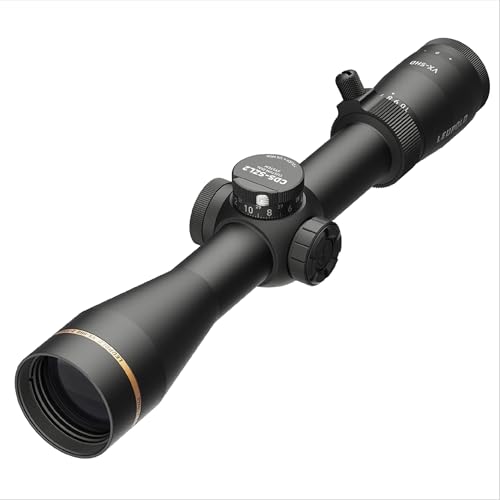
Leupold VX-5HD Gen 2 2-10x42
I picked it for the light .270 and the .270 WSM, where eye relief and ounces matter most. The eye relief barely changes across the zoom, and the 2x low end helps in timber.
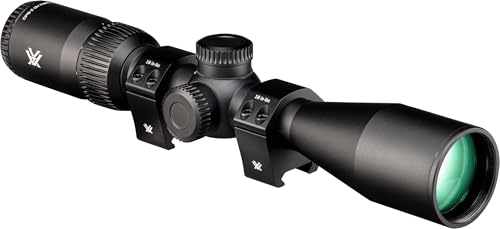
Vortex Triumph HD 3-9x40
For a Mossberg Patriot or Savage Axis bought on a budget, this is the scope I'd hand over. It comes with rings, the 3-9x range fits every deer shot the rifle will see, and Vortex backs it with the same warranty as its top lines.
On this page
What the .270's Trajectory Means for Your Scope
A .270 Winchester with a 200 yard zero stays close enough to the crosshair that most deer hunters can hold dead on to about 300 yards. Hornady's 130 grain SST load prints 5.7 inches low at 300 yards from that zero, which still lands inside the chest of a mature buck if you hold on the top half of the vitals. Out to that distance, the scope never has to do anything but show you the animal clearly.
Past 300 the picture flips. The same load falls 16.7 inches at 400 and 33.7 inches at 500, and guessing that much hold is where good hunters wound game. So I sort .270 shooters into two groups. If your country never offers a shot past 300, buy glass and a simple reticle and stop there. If you hunt the plains or big basins, buy a dial you can trust and learn it before the season, because a .270 has plenty of energy past 400 yards and the only weak link left is the guess.
One more thing sets this cartridge apart: it shares its case length and long action with the .30-06, so ring spacing and base choices follow the same rules I laid out in my guide to scoping a .30-06. What differs is recoil. A .270 kicks noticeably less, which gives you more freedom with eye relief, until you move up to the .270 WSM.
The 4 Best Scopes for .270 Winchester
The four picks split by where the shot happens. The Zeiss handles woods and field edges at the ends of the day, the Swarovski handles open ground past 300 yards, the Leupold goes on a light rifle or a short magnum that has to be carried far, and the Vortex is the honest starting point for a first rifle.
1. Zeiss Conquest V4 3-12x56
Most .270 rifles in America hunt deer in the woods, and the deciding minute of those hunts is usually the last one of legal light. That is why I rank a fixed, capped scope first on a cartridge known for long shots. The big objective gives a wide exit pupil at the power settings you actually use in dim light, and the Z-Plex #20 is thin enough at the center not to cover a deer at 250 yards yet heavy enough at the outer posts to find in shadow.
I like that Zeiss did not try to make this a long range scope. The elevation turret is capped, which on a rifle zeroed at 200 and held dead on to 300 is exactly what I want. A capped turret can't get bumped in a truck rack, and nobody at camp can "help" by spinning it.
Zeiss sets parallax at 100 yards with no knob to change it, and that is the real trade-off. At 12x on a deer at 300 yards, a slightly off-center eye can move the crosshair a little on the target. My fix is simple: hunt at 6x to 8x, where it doesn't matter, and keep a consistent cheek weld on the stock when you do turn it up.
The other thing I'd plan for is the 56 mm bell. Customers who came back with a big-objective scope that "wouldn't fit" had nearly always bought low rings without checking barrel clearance, and the ones who went too tall lost their cheek weld and couldn't find the picture fast. Lay the scope on the rifle with the rings you intend to use before you tighten anything, and expect to need medium or high rings on most sporters. If the stock comb sits low, a slip-on cheek riser is cheaper than shooting with your head floating.
Key Specs
- Magnification
- 3 to 12x
- Objective
- 56 mm
- Tube
- 30 mm
- Focal plane
- SFP
- Eye relief
- 3.5 in
- Weight
- 21.5 oz
What Stands Out
- Bright, wide picture in the last minutes of light
- Plain Z-Plex that stays readable in shadow
- Capped turret suits a set-and-forget .270 zero
Real Trade-Offs
- Fixed 100 yard parallax shows at full power on distant deer
- The 56 mm bell needs taller rings than most sporters ship with
- Heavier than a 40 mm scope on a light rifle
My verdict
For the woods and field-edge deer hunting most .270 owners do, I'd spend the money here first. It does the one job that matters most at dusk and stays out of the way the rest of the time.
2. Swarovski Z5+ 3.5-18x50
This is where the .270's flat path pays off at real distance, provided you stop guessing. Out past 400 the drop numbers get too big to hold by feel, and a ballistic turret matched to your load turns the shot into a range reading and a twist. Against the Zeiss, you give up a little of that big 56 mm brightness and gain a turret you can use, plus enough top power to judge a pronghorn buck's horns before you commit.
The Z5+ is the 2025 update of Swarovski's Z5 line, and the change I care about most is the Ballistic Turret. Swarovski redesigned it with a zero stop, a lock and two revolutions of 20 MOA each, so you have about 40 MOA you can dial from zero. For a .270 that covers any range I'd ever shoot at game with plenty to spare. The 30 mm tube also adds total travel over the old 1 inch Z5.
Here is the habit I'd build. The turret marks are only as good as the numbers you feed Swarovski's ballistic program, so chronograph your load from your own barrel instead of trusting the box velocity. Then shoot it at 300, 400 and 500 yards on paper before the season. Owners of the older Z5 BT turret argued online about return to zero; the Z5+ turret is a new design, but I'd still run a simple tall-target check after mounting, because confidence in a dial is something you earn at the range.
The weight is the quiet surprise. Under 20 ounces with this range of power is light for an open-country scope, so a 7 pound .270 stays a 7 pound .270 instead of turning into a bench rifle. If your plans include elk at long range, though, I'd rather pair this kind of glass with more gun, as I explain in my 7mm Rem Mag scope guide.
Key Specs
- Magnification
- 3.5 to 18x
- Objective
- 50 mm
- Tube
- 30 mm
- Eye relief
- 3.7 in
- Elevation
- 80 MOA
- Weight
- 19.8 oz
What Stands Out
- Locking ballistic turret with a zero stop and two revolutions
- Light for a scope with an 18x top end
- Adjustable parallax for clean focus at long range
Real Trade-Offs
- The turret only matches the load you program and verify
- No illumination on this model (that is the Z5i+)
- Owner history on the new turret is still short
My verdict
If your .270 hunts open ground, this is the scope that lets the cartridge reach the distance it is capable of. Set it up with real numbers and it removes the guess from the long shot.
3. Leupold VX-5HD Gen 2 2-10x42
The reason I'd put this on a short magnum is the eye relief, which Leupold holds nearly the same from 2x to 10x. On a light .270 WSM that kicks harder than its parent, the eyepiece is where it should be whether you are on low power in the trees or cranked up across a draw. Compared with the Zeiss, you trade a bit of last-light brightness for a lighter scope and a lower starting power that helps on close bucks.
The FireDot center is a real help on dark timber backgrounds, and the motion sensor shuts it off after a few minutes still and wakes it when the rifle moves. I'd still carry a spare CR2032 in the stock or pack, because a dead battery always picks the coldest morning. Leupold's custom CDS dial is cut for one load, so I'd order it with your chronographed velocity and treat a dial cut from box numbers as a starting point until you have confirmed it at distance. If your light rifle is a Tikka, my Tikka T3x scope guide covers the dovetail and rail choices for it.
Key Specs
- Magnification
- 2 to 10x
- Objective
- 42 mm
- Tube
- 30 mm
- Focal plane
- SFP
- Eye relief
- 3.8 in
- Weight
- 18.9 oz
What Stands Out
- Eye relief stays nearly constant across the zoom
- 2x low end for timber and close shots
- FireDot with motion-sensor shutoff
Real Trade-Offs
- Parallax set at 150 yards with no adjustment
- CDS dial is only right for the load it was cut for
4. Vortex Triumph HD 3-9x40
I'd pick this over spending the whole budget on a scope because a first rifle needs ammunition and range time more than premium glass. On a .270 the Triumph's 3-9x range covers every whitetail shot inside 300 yards, and the eye relief is generous enough for a youth shooter still learning a consistent head position. The Zeiss would show a buck far better in the last ten minutes of light, and I'd accept losing that on a first rifle in exchange for more practice ammunition.
The Dead-Hold BDC dots are only correct at 9x, and Vortex draws them for an average load rather than your .270. I'd use the center crosshair with a 200 yard zero and leave the dots alone until you have checked them at real distance. The line is new, so owner history is short; the transferable lifetime warranty covers that risk. Check that the included low rings clear the bell and the bolt handle on your rifle, and read the full review of the Vortex Diamondback 3-9x40 if you want a brighter step up. I'd only make that jump once the new hunter has a season behind them.
Key Specs
- Magnification
- 3 to 9x
- Objective
- 40 mm
- Tube
- 1 in
- Focal plane
- SFP
- Eye relief
- 3.9 in
- Weight
- 16.5 oz
What Stands Out
- Rings included, so a first rifle is ready to mount
- Forgiving eye relief for new shooters
- Transferable lifetime warranty
Real Trade-Offs
- BDC holds only valid at 9x and not drawn for your load
- Dim in the last minutes of light
.270 Scopes Compared
| Zeiss Conquest V4 3-12x56 | 3 | Capped | 70 | Fixed, 100 yd | Dawn and dusk whitetail |
| Swarovski Z5+ 3.5-18x50 | 3.5 | Ballistic turret, zero stop | 80 | Adjustable | Open country past 300 yd |
| Leupold VX-5HD Gen 2 2-10x42 | 2 | CDS dial, ZeroLock | 120 | Fixed, 150 yd | Light rifle and .270 WSM |
| Vortex Triumph HD 3-9x40 | 3 | Capped | 55 | Fixed, 100 yd | First scope on a budget rifle |
Elevation travel never limits a .270 hunter; turret style and low-light brightness are what separate these four.
Setting Up a Scope on a .270 Winchester
A good .270 setup comes down to three choices made before the season: the zero, the rings and the eye relief for the load you shoot.
Choose the Zero Before the Reticle
I zero a .270 deer rifle at 200 yards, since common loads then print no more than six inches low by 300. The Hornady numbers below show why heavier bullets and the WSM change less than most hunters think inside that range, and why everything past 400 needs either a dial or real practice with holds.
| Load (Hornady, 200 yd zero) | Muzzle (fps) | Drop at 300 yd (in) | Drop at 400 yd (in) | Drop at 500 yd (in) |
|---|---|---|---|---|
| .270 Win 130 gr SST | 3,200 | 5.7 | 16.7 | 33.7 |
| .270 Win 145 gr ELD-X | 2,970 | 6.5 | 18.8 | 37.6 |
| .270 WSM 145 gr ELD-X | 3,100 | 5.9 | 17.1 | 34.2 |
Hornady lists these from a 24 inch test barrel, and a 22 inch sporter will run a little slower, which is one more reason to confirm your drops on paper.
Returns That Weren't the Scope's Fault
A scope handed back at the counter as defective was usually a mounting or setup problem, and the .270 had its own pattern of them.
- Loose base screws on older rifles. A lot of .270s are hand-me-down sporters, and a "won't hold zero" complaint on one of them was more often a base screw that had backed out than a bad scope. Pull the bases, degrease the threads and torque them to the maker's spec before you blame the glass.
- Too much magnification bought for too little country. A big 4-16x or 6-24x bought for a whitetail stand came back after a season as dim and slow to find a deer in the trees. On a .270 inside 300 yards, a 3-9x or 3-12x is the faster tool.
- Eye relief set standing at the counter. A scope that felt fine in a T-shirt touched an eyebrow from a sitting position in a heavy coat. Set the eyepiece in your real hunting position and clothes.
- BDC dots trusted at the wrong power. Holds drawn into a second focal plane reticle only match the drop at one magnification, usually the top. Hunters who held at 6x missed high or low and blamed the scope.
Rings and Bases for a Long Action
Because the .270 is a long-action cartridge, the front and rear bases sit farther apart than on a short action, which suits most scopes. The problems come with short-tubed scopes that leave little room between the turret and bell, and with big objectives on low rings. Many entry rifles in .270 ship with two-piece Weaver-style bases, which work fine if the screws are torqued and the rings line up; I check alignment with the rings loose before I torque a thing. If your rifle is a classic, my Winchester Model 70 scope guide covers the mounting quirks of that action.
What Changes on a .270 WSM
The .270 WSM gains about 130 fps over the .270 Win with the same 145 grain bullet, and it comes in short, light rifles that recoil noticeably harder. That makes eye relief and a scope that sits forward in its rings more important than any gain in trajectory. Pick a scope whose eye relief stays generous at the power you shoot most, and mount it so you have room to spare from a sitting or prone position.
.270 Scope Questions
Is a 3-9x40 enough scope for a .270?
For deer inside 300 yards, yes. A .270 with a 200 yard zero stays close enough to hold dead on at that distance, so a quality 3-9x40 covers most hunting. Choose more magnification and a turret only if you regularly see shots past 300 yards.
Which scope suits a .270 WSM?
Pick a scope with generous eye relief that stays steady across the zoom, because the WSM usually comes in light rifles that recoil harder than a .270 Win. A 2-10x or 3-12x covers most hunting, and a lighter scope keeps the rifle easy to carry.
What scope mounts does a Mossberg Patriot .270 use?
Many Patriot models ship with two-piece Weaver-style bases, though some variants come with a Picatinny rail, so check your rifle. Either way, use rings that clear the scope's objective bell and torque the base screws to the manufacturer's spec.
What magnification do I need for a .270 Winchester?
Most deer hunting needs 3x to 9x, and 10x to 12x helps on open ground. Go to 15x or more only if you hunt pronghorn or mule deer at long range and will dial a turret set up for your load.
Can you put a thermal scope on a .270?
Yes, a thermal riflescope mounts on a .270 like any other scope, as long as it is rated for centerfire recoil. Check your state's rules on night hunting and thermal optics first, because they vary widely and often limit which animals you can hunt with one.
Final Verdict
For most .270 Winchester hunters, my pick is the Zeiss Conquest V4 3-12x56, because a flat-shooting cartridge used on deer gains more from bright glass at dusk than from any dial. If you hunt open country and expect shots past 300 yards, the Swarovski Z5+ 3.5-18x50 gives you a turret worth trusting. On a light mountain rifle or a .270 WSM, the Leupold VX-5HD Gen 2 2-10x42 is the lighter, more forgiving choice.