
My Verdict
Burris's redesigned Burris Fullfield 4-16x50 is a smart buy for deer and varmint hunters who want 25-yard side parallax, bright 50 mm glass, and swappable Knob Synergy turrets without hauling a heavy 30 mm scope. Plan on a one-piece rail for its short 12.3-inch tube and keep dialing expectations inside 500 yards.
When Burris retired the Fullfield IV lineup for the series' 50th anniversary, the company dropped the old 4.5-14x42 slot and rebuilt its mid-to-high hunting tier around the fifth-generation Fullfield 4-16x50. On paper, squeezing a 4x zoom erector, 25-yard side focus, and a 50 mm objective into a 17.7-ounce 1-inch tube solves the exact complaint I heard for years at a Montana sporting goods counter: hunters wanted reach past 300 yards without bolting a two-pound tactical brick onto a sporter rifle. Still, that short chassis brings real mounting and elevation limits you need to understand before buying.
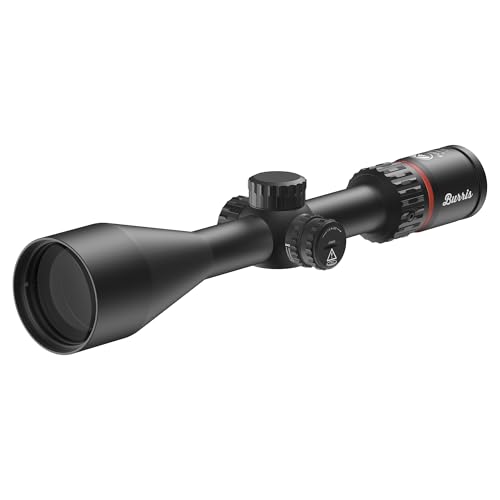
At a glance
- Magnification
- 4 to 16x
- Objective
- 50 mm
- Tube
- 1 in
- Focal plane
- SFP
- Eye relief
- 3.7 to 4.2 in
- Weight
- 17.7 oz
On this page
Optical Clarity, 50 mm Low Light, and Reticle Choices
Optical brightness and usable focus distance are where this redesigned Fullfield earns its keep over older budget hunting scopes. At 4x, a 27-foot sight picture across 100 yards is wide enough for timber edges and trotting coyotes, while 16x narrows to 6.75 feet for sorting antlers across an open coulee or holding steady on prairie dogs. In early field reports and forum threads, shooters consistently note that the multi-coated 50 mm objective holds contrast well at dawn and dusk, beating smaller 40 mm entry glass during the last ten minutes of legal light.
I put far more weight on the 25-yard side-focus parallax knob than on the extra 2x of top magnification. Fixed-parallax hunting scopes force compromises past 250 yards on small targets, and I have watched plenty of accurate varmint rifles get blamed for fuzzy focus that was purely parallax error. Being able to dial the image sharp from 25 yards to infinity lets this single scope pull duty on a spring ground-squirrel rifle, a summer prairie-dog rig, and a November deer gun without breaking your cheek weld.
Eye relief runs a generous 3.7 to 4.2 inches across the zoom range, which I appreciate on light hunting rifles in .270 Win or .30-06 when you are wearing a heavy winter coat. Burris ships the 4-16x50 in four second focal plane reticle configurations: standard Plex, Ballistic Plex, Wind MOA, and an illuminated Ballistic E3 that adds half an ounce to the tube. I steer pure timber deer hunters toward the clean Plex or illuminated Ballistic E3, while open-country shooters and varmint hunters, especially those setting up fast flat-shooting rifles like the ones in my .22-250 scope guide, get far more mileage out of the Wind MOA hashes.
Knob Synergy Turrets and the 54-MOA Travel Ceiling
Traditional budget Burris scopes forced you to pick permanently between capped hunting dials and exposed target knobs, and older models lacked a clean return-to-zero stop. The fifth-generation Knob Synergy system fixes that by letting you run low-profile capped turrets out of the box and later swap the elevation dial for an exposed zero-stop turret or a custom ballistic knob cut for your load. For a hunter who mostly uses point-blank zero today but wants the option to dial pronghorn shots next fall, I think that modularity is genuinely useful rather than a marketing gimmick.
That said, I agree with the consensus on Sniper's Hide and Rokslide: treat this optic as a set-and-forget or occasional-dial hunting scope, not a heavy-duty range dialer. Total elevation and windage adjustment cap at 54 MOA on the 1-inch tube, which leaves roughly 25 to 27 MOA of upward travel from a mechanical center on a flat base. For a 200-yard zeroed deer or varmint cartridge out to 500 yards, 54 MOA is plenty, yet shooters who push slower bullets past 700 yards will hit the top of the erector fast. If your shooting routine revolves around dialing 10 or 12 MILs every weekend, step straight into a 30 mm or 34 mm first focal plane scope instead of asking a 1-inch hunting tube to do a tactical job.
Short-Tube Mounting Geometry on Bolt Actions
Compact 12.3-inch length keeps weight under 18 ounces and balances nicely on a trim rifle, yet it creates the single biggest setup quirk owners flag across Rokslide: limited straight tube space for ring placement. I ran into this exact layout headache hundreds of times at the shop bench when mounting compact scopes on long-action receivers like my own older Winchester Model 70 .30-06 or the lightweight hunting platforms covered in my Tikka T3x scope guide. With fixed two-piece bases, the front ring often bumps the objective flare before the ocular lens sits back far enough for natural eye relief.
My fix is simple and cheap: skip two-piece bases on long actions and install a one-piece Picatinny rail from the start. A full-length rail lets you slide both 1-inch rings inward toward the turret saddle and move the entire scope fore or aft until your sight picture fills cleanly with your eyes closed and mounted in your real hunting coat. Plan on medium or high rings depending on your barrel contour so the 50 mm bell clears the barrel with room for flip-up lens caps, and finish every ring cap screw with an inch-pound torque driver set strictly to Burris's manual specification so you never pinch the 1-inch main tube.
Tip
Before adding threadlocker to your base screws, shoulder the rifle in the heaviest jacket you hunt in and check eye relief at both 4x and 16x. Setting eye relief at 16x first prevents scope shadow when you dial up for a longer shot.
Strengths and Trade-Offs
What Stands Out
- Side-focus parallax down to 25 yards keeps close varmints and distant deer sharp
- Lightweight 17.7-ounce 1-inch chassis preserves balance on sporter rifles
- Bright 50 mm objective and generous 3.7 to 4.2 inches of eye relief suit dawn hunts
- Knob Synergy elevation system lets you upgrade from capped dials to custom turrets later
- Covered for life under Burris's no-questions-asked Forever Warranty
Real Trade-Offs
- Short 12.3-inch overall length restricts ring spacing on long-action two-piece bases
- 54 MOA total elevation ceiling limits serious long-range dialing past 600 yards
- Second focal plane reticles only hold true subtensions at maximum 16x magnification
- Base Plex, Ballistic Plex, and Wind MOA versions skip illumination
Alternatives to Consider
Before ordering the Fullfield 4-16x50, weigh it against three close rivals that change the trade-off on weight, focal plane, or dialing travel.
| Scope | Tube (mm / in) | Focal Plane | Min Parallax (yd) | Total Elevation | Weight (oz) |
|---|---|---|---|---|---|
| Burris Fullfield 4-16x50 | 1 in | SFP | 25 | 54 MOA | 17.7 |
| Burris Fullfield 2.5-10x42 | 1 in | SFP | 100 (fixed) | 81 MOA | 15.4 |
| Vortex Diamondback Tactical 4-16x44 | 30 mm | FFP | 20 | 85 MOA | 23.1 |
| Hawke Vantage 4-16x50 | 1 in | SFP | 15 | 60 MOA | 21.9 |
- Burris Fullfield 2.5-10x42: If most of your shots stay inside 250 yards in timber or brush, dropping to this smaller 42 mm sibling saves 2.3 ounces, widens your low-end view to 43 feet, and gives you 81 MOA of travel, though you give up side parallax and top-end reach.
- Vortex Diamondback Tactical 4-16x44: Shooters who want exposed dialing turrets and a first focal plane reticle for range trainers should pick this 30 mm Vortex instead; you gain 85 MOA of travel and accurate mid-power holds at the cost of 5.4 extra ounces and no zero stop.
- Hawke Vantage 4-16x50: If your main job is rimfire or airgun shooting inside 50 yards, the Hawke focuses closer at 15 yards and includes standard illumination, though I prefer the Burris for centerfire durability, lighter weight, and cleaner glass at 16x.
Frequently Asked Questions
How does the fifth-generation Burris Fullfield 4-16x50 differ from the Fullfield IV 4.5-14x42?
After discontinuing the older 4.5-14x42 generation, Burris rebuilt the fifth-generation Fullfield with a shorter 12.3-inch chassis, updated lens coatings, a true 4x zoom ratio from 4x to 16x, and the modular Knob Synergy turret system. You gain a wider low end, higher top magnification, and a 50 mm objective in a lighter package, though you must plan around the shorter mounting tube.
Which ring height clears the 50 mm bell on the Burris Fullfield 4-16x50?
Most sporter-barrel bolt actions clear the 50 mm objective cleanly with medium 1-inch rings on a Picatinny rail, while heavy varmint barrels or rifles with high-profile bases typically need high rings. Always leave at least an eighth of an inch of clearance above the barrel so flip-up caps fit without rubbing.
Can I use the Burris Fullfield 4-16x50 on a .22 LR or rimfire rifle?
Yes, the 25-yard minimum side-focus parallax makes it much more usable on a .22 LR or .17 HMR than fixed-100-yard deer scopes. Just remember that on a short rimfire dovetail receiver, you may need an adapter rail to position the rings cleanly for eye relief.
Does the 54 MOA elevation limit require a 20-MOA rail?
For standard hunting cartridges zeroed at 200 yards and shot inside 500 yards, a flat 0-MOA rail gives you plenty of upward adjustment. If you plan to install a custom Knob Synergy dial and stretch a .308 Win or 6.5 Creedmoor past 600 yards, a 20-MOA rail keeps the erector closer to optical center.
Which Fullfield 4-16x50 reticle should I pick?
Choose the illuminated Ballistic E3 if you hunt deer or coyotes during the first and last minutes of light, or the Wind MOA version if you shoot open-country varmints and want horizontal wind references. Stick with the standard Plex only if you hunt close timber and prefer an uncluttered sight picture.
Final Verdict
I recommend the Burris Fullfield 4-16x50 to deer, pronghorn, and varmint hunters who want real 25-yard side parallax, bright 50 mm glass, and future-proof Knob Synergy turrets without giving up the trim feel of a 1-inch tube. Pair it with a one-piece rail to solve its short mounting length, keep your shooting inside 500 yards, and it delivers far more practical hunting value than heavier budget tactical scopes.