
Quick Answer
The best AR-15 cleaning kit for most owners is the Otis MSR Cleaning System: it pairs a breech-to-muzzle cable and Ripcord with a 5.56 chamber brush and the B.O.N.E. tool for bolt carrier carbon, all in a pouch that fits a range bag. For bench work at home, I'd pick the Real Avid Bore-Max Master kit.
Most AR-15 cleaning kits are sold by brush count, and that is the wrong way to shop. The bore of a 5.56 barrel cleans up in a few passes. The carbon that causes trouble bakes onto the bolt tail, the firing pin, the inside of the carrier and the locking lug recesses at the back of the chamber, and a kit without tools for those spots leaves the real work undone.
Kits that came back to the counter were rarely broken. Owners returned them because the case held nine bore brushes and nothing that would scrape a bolt. Others brought back the AR itself, short-stroking or failing to extract, with a bore that looked clean and a chamber that hadn't been touched since the rifle was new. My own AR-15 carbine rides along on Texas hog trips, and it gets the chamber and carrier attention first, the bore last.
The five kits below split by where you clean: in one compact pouch, at a home bench, on a budget, at the range, or in a house with both an AR and a 9mm pistol. For the full process, step by step, see my guide on how to clean an AR-15.
My Top Picks
5 picks
Otis MSR Cleaning System .223/5.56
It carries the tools most kits skip: a 5.56 chamber brush, a locking lug scraper and the B.O.N.E. tool for carrier carbon. Add a breech-to-muzzle cable and a Ripcord, and the whole AR gets cleaned from one small pouch.

Real Avid Bore-Max Master Cleaning Kit
A rod, a bore guide and gun yokes turn a kitchen table into a real bench. I'd pick it for an owner who cleans several rifles at home, not only the AR.
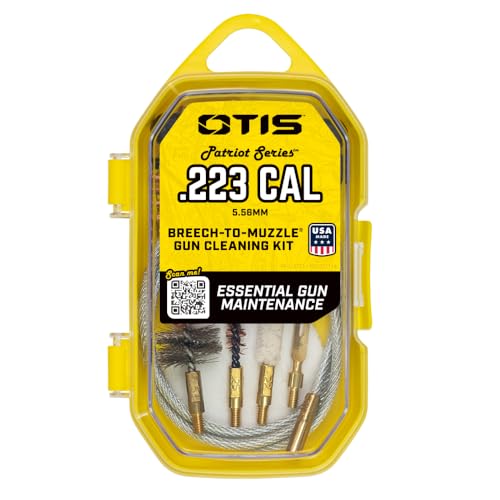
Otis Patriot .223 Rifle Cleaning Kit
It keeps the parts that matter, a cable, a 5.56 chamber brush and picks, and leaves out the extras. It is the kit I'd hand a new AR owner who needs the basics first.

Clenzoil Field & Range Essentials 5.56
One pull of the Cobra and a wipe of CLP keep an AR running between real cleanings. I'd keep it in the range bag, not on the bench.

Otis Defender .223/5.56 and 9mm Kit
Two Ripcords, two bore brushes and both patch sizes cover a 5.56 rifle and a 9mm pistol from one pouch. It suits a home-defense pair that gets shot together.
On this page
- AR-15 Cleaning Kits Compared
- The 5 Best AR-15 Cleaning Kits
- 1. Otis MSR Cleaning System .223/5.56
- 2. Real Avid Bore-Max Master Cleaning Kit
- 3. Otis Patriot .223 Rifle Cleaning Kit
- 4. Clenzoil Field & Range Essentials 5.56
- 5. Otis Defender .223/5.56 and 9mm Kit
- Where an AR-15 Actually Gets Dirty
- What I Changed My Mind About on AR Cleaning
- FAQ
- Final Verdict
Safety first
Unload the rifle, remove the magazine and check the chamber by sight and feel before you open it. Work with ventilation, wear gloves and eye protection when you use solvents or spray lubricants, and keep solvents away from optics.
AR-15 Cleaning Kits Compared
| Otis MSR Cleaning System .223/5.56 | Cable + Ripcord | Yes | B.O.N.E. tool, scrapers | Yes, 0.5 oz | No | Anywhere |
| Real Avid Bore-Max Master Cleaning Kit | 3-piece rod + bore guide | Not listed | Steel picks | No | Pistol, rifle, shotgun | Home bench |
| Otis Patriot .223 Rifle Cleaning Kit | Cable | Yes | Picks only | No | No | Home or truck |
| Clenzoil Field & Range Essentials 5.56 | Cobra pull-through | No | No | Yes, CLP | No | Range bag |
| Otis Defender .223/5.56 and 9mm Kit | Cables + 2 Ripcords | Yes | No | Yes, 0.5 oz | 9mm | Home, two guns |
The chamber brush and bolt carrier columns are the ones I'd read first; the bore tool matters less on an AR than on a bolt gun.
The 5 Best AR-15 Cleaning Kits
The top pick is the only kit here that handles the bore, the chamber and the bolt carrier without adding anything. The second is a bench system for owners with several guns, the third is the stripped-down version of the first, the fourth is a quick range wipe, and the last covers an AR and a 9mm together.
1. Otis MSR Cleaning System .223/5.56
I put this Otis first because it is built around where an AR gets dirty. The chamber brush has steel bristles at its base that reach the locking lug recesses, the spot most owners never touch. The B.O.N.E. tool scrapes carbon off the bolt tail, firing pin and carrier in a few twists, which is the job I used to see people attempt with a pocketknife. Add the locking lug scraper and picks, and there is nothing on the bolt carrier group this kit can't reach.
The cable pulls from chamber to muzzle, the same direction I'd push a rod, and its coating keeps the crown safe. That makes it a better field tool than a jointed rod, and good enough for routine bench cleaning on a 5.56. The Ripcord is a one-pass wipe for days when you only want the worst fouling out.
Two habits make this kit work. Buy extra patches the day you buy it, because ten don't last long, and trim them so a patch never wads up in front of the chamber, which is the cable jam AR owners complain about most. I'd also keep a second slotted tip, since a muzzle brake can catch the first one on the way out.
Opinion on the B.O.N.E. tool is divided because it fits loosely on purpose to cover different bolts. I'd give it a few honest twists, then finish stubborn carbon with the scraper rather than forcing it. The small FP-10 bottle is enough to lube the carrier for a season of normal shooting, though I'd buy a larger bottle before it runs dry.
Key Specs
- Bore tools
- 30 in Memory-Flex cable + 36 in Ripcord
- Threads
- 8-32
- Chamber brush
- 5.56 with locking lug bristles
- Carrier tools
- B.O.N.E. tool, locking lug scraper, picks
- Lube
- Shooter's Choice FP-10, 0.5 oz
- Case
- Soft pack, about 4 x 4 x 2.5 in
What Stands Out
- Chamber brush and lug scraper reach the area that causes malfunctions.
- B.O.N.E. tool clears bolt and carrier carbon fast.
- Breech-to-muzzle cable and Ripcord fit a small pouch.
Real Trade-Offs
- Only ten patches in the kit.
- Oversized patches can jam the cable.
- B.O.N.E. tool fit feels loose to some owners.
My verdict
This is the AR-15 kit I'd buy first. Stock up on patches, and it covers every part of the rifle that actually needs cleaning.
2. Real Avid Bore-Max Master Cleaning Kit
This is the kit I'd set up on a kitchen table for a family with several guns. The case opens into a workstation with yokes that hold the rifle steady, the lid doubles as a parts tray, and the work light earns its place the first time you look for a dropped detent. The bore guide is the part I value most, because it keeps a rod centered so it never rubs the throat.
It ranks second because it is a general bench system, not an AR kit. No dedicated 5.56 chamber brush shows up in the parts list or in the reviews I read, and there is no bolt carrier scraper beyond steel picks. Plan on buying a chamber brush and a carbon scraper the day you buy it. The three-piece rod is the other compromise; I prefer a one-piece rod, and the kit is the right home for one later, as I explain in my cleaning rod guide.
Real Avid's own advice is to use its precision patches with its precision jags, because other patches can wedge in the bore. I'd follow it, and I'd budget for solvent and oil, since none come in the box.
Against the Otis MSR you gain a stable bench, a light and multi-caliber reach, and you lose the AR-specific carbon tools and any chance of carrying it in a pocket. I'd treat the two as partners rather than rivals: the Real Avid as the home base, the Otis as the kit that travels with the rifle. Bought together, they cover every gun in the safe and every place you shoot.
Key Specs
- Bore tool
- 3-piece Bore-Max Speed Rod
- Bore guide
- Smart-Fit, 3 ends
- Calibers
- .22 to .45 pistol, .223 to .30 rifle, 12 and 20 gauge
- Brushes
- 8 double-density, 4 steel and 4 bronze
- Extras
- Gun Gripper yokes, work light
- Solvent
- Not included
What Stands Out
- Bore guide keeps the rod centered.
- Gun Gripper yokes and work light make a real bench.
- Covers pistols, rifles and shotguns.
Real Trade-Offs
- No AR chamber brush or carrier scraper listed.
- Three-piece rod rather than one-piece.
- No solvent or oil included.
My verdict
Choose this if the AR shares the bench with other guns. Add a 5.56 chamber brush and a carbon scraper, and it does everything.
3. Otis Patriot .223 Rifle Cleaning Kit
The Patriot keeps the cable and the 5.56 chamber brush from the Otis MSR and drops the B.O.N.E. tool, the scrapers and the lube. I'd rank it third because that chamber brush is the piece cheap generic kits never include, and it is the one that prevents most extraction trouble. The hard case also survives a truck floor better than a soft pouch.
I've walked new owners through their first cleaning kits more times than I can count, and the ones who started with a chamber brush had fewer extraction complaints later. Next to the MSR you'll scrape the bolt with the picks and some patience, and you'll supply your own CLP. Once you see how much carbon your rifle builds, pick up a B.O.N.E. tool or a carbon scraper, and buy extra patches the same day, since this kit carries only ten. I'd also keep the cable coiled loosely in the case; a tight kink leaves a bend that rubs the bore. If you clean at a bench, a cradle that holds the upper steady helps more than any extra brush, which is why I like the picks in my gun vise guide.
Key Specs
- Bore tool
- 30 in Memory-Flex cable
- Threads
- 8-32
- Chamber brush
- 5.56 with locking lug bristles
- Brushes
- 5.56 bronze bore brush, mop, short AP brush
- Picks
- Straight and bent
- Case
- Hard case
What Stands Out
- 5.56 chamber brush in a budget kit.
- Breech-to-muzzle cable.
- Tough hard case.
Real Trade-Offs
- No bolt carrier tool.
- No lube or solvent.
4. Clenzoil Field & Range Essentials 5.56
I'd keep this kit in the range bag and nowhere else. The Cobra scrubs and swabs the bore in one pull from the chamber end, and the needle oiler puts CLP exactly where an AR wants it: carrier rails, cam pin and bolt. That keeps a rifle running through a long day until it gets a real cleaning at home.
Small-bore Cobras fit snug, so I'd start the pull straight and steady rather than yanking. I'd wash the Cobra after a few uses, since a fouled braid spreads carbon around instead of lifting it. The Otis MSR carries every chamber and carrier tool this kit lacks, which is fine for a range-bag kit and a mistake for a home kit. My rule is simple: if the rifle starts running dry or sluggish at the range, this kit gets it through the day, and the real cleaning waits for the bench.
Key Specs
- Bore tool
- Cobra pull-through, 5.56 / .22 cal
- Lube
- Field & Range CLP
- Applicators
- 1 oz needle oiler, 2 oz pump sprayer
- Brush
- Nylon utility brush
- Extras
- Microfiber towel, cotton swabs
- Chamber brush
- None
What Stands Out
- One-pull bore cleaner.
- Needle oiler for precise lube.
- Small enough for any range bag.
Real Trade-Offs
- No chamber brush or bolt tools.
- Cobra fits tight in small bores.
5. Otis Defender .223/5.56 and 9mm Kit
The Defender earns its slot because many AR owners also keep a 9mm, and this kit cleans both without a second case. The short cable handles the pistol barrel, the long one the rifle, and each caliber gets its own Ripcord and bore brush. I'd rank it last only because it lacks the B.O.N.E. tool and scrapers that put the MSR on top.
The cable ends are slick, so I'd wrap a patch around them for grip when pulling a tight patch. Against the Otis MSR you trade carrier tools for a second caliber, which is the right trade only if both guns live in the same safe. I'd add a B.O.N.E. tool to this pouch; it fits, and then the kit covers the AR as fully as the MSR does. I'd also label the two Ripcords with a strip of colored tape, because in a dim garage they look almost exactly alike.
Key Specs
- Bore tools
- 8 in and 30 in Memory-Flex cables + 5.56 and 9mm Ripcords
- Threads
- 8-32
- Chamber brush
- 5.56
- Brushes
- 5.56 and 9mm bronze, blue nylon AP
- Lube
- Shooter's Choice FP-10, 0.5 oz
- Case
- Soft pack with MOLLE strap
What Stands Out
- Cleans a 5.56 rifle and a 9mm pistol.
- Two cable lengths and two Ripcords.
- MOLLE-ready pouch.
Real Trade-Offs
- No bolt carrier tools.
- Slick cable ends are hard to grip.
Where an AR-15 Actually Gets Dirty
A direct-impingement AR-15 vents hot gas into the bolt carrier, so carbon builds up in the carrier and chamber much faster than in the bore.
The Carbon Hot Spots
The bolt tail, firing pin, inside of the carrier, cam pin slot and the locking lug recesses behind the chamber collect the hard carbon. Those are the places a kit has to reach. Military maintenance guidance calls for scrubbing the bolt lugs, extractor, firing pin and barrel extension lugs with a small brush and CLP, and that list is a good test for any kit.
| Part | What builds up | Tool that reaches it |
|---|---|---|
| Bolt tail and firing pin | Hard baked carbon | B.O.N.E. tool or carbon scraper |
| Inside the carrier | Carbon and old lube | Scraper, AP brush, patches |
| Locking lug recesses | Carbon and brass dust | Chamber brush with lug bristles |
| Chamber | Carbon, lacquer from steel-case ammo | 5.56 chamber brush |
| Bore | Light powder fouling, some copper | Cable, rod or pull-through |
Clean From the Chamber End
Every tool in the bore should go in at the chamber and come out at the muzzle. A cable or rod pushed from the muzzle drags grit across the crown, and that is the part of the barrel that matters most for accuracy. With the upper open and the carrier out, an AR makes this easy.
Lube Where It Slides
The carrier rails, cam pin area and bolt body want a generous coat of CLP; the firing pin wants only a light film. Dry carriers are a bigger cause of trouble than dirty bores. For choosing a solvent for heavier fouling, my gun cleaning solvent guide matches products to fouling types.
What I Changed My Mind About on AR Cleaning
A few of my early habits with ARs turned out to be wrong, and I'd skip them now.
- Scrubbing the bore first. I used to start with the barrel; now the chamber and carrier get the time, because that is where malfunctions start.
- Chasing bare metal on the bolt tail. A thin carbon stain there is normal. Scrape the hard buildup and move on rather than polishing.
- Running a rod with no bore guide. Without a guide a jointed rod wobbles against the throat. A cable pulled from the chamber is gentler if you lack a guide.
- Cleaning on a schedule. I clean an AR by how it was shot and stored, not by the calendar, as I explain in my notes on how often to clean a gun.
FAQ
Are bronze chamber brushes safe for an AR-15?
Yes, for normal use. Bronze is softer than barrel steel and the chrome or nitride lining in most AR chambers. Use it with CLP or solvent, twist and plunge a few times, then patch dry. Don't pair it with abrasive cleaners.
What should an AR-15 cleaning kit include?
A breech-to-muzzle cable or rod, a 5.56 bore brush and patches, a 5.56 chamber brush that reaches the locking lugs, and a tool for scraping carbon from the bolt and carrier. CLP or a solvent and oil finish the kit. Extra calibers are optional.
Can I use a bore snake on an AR-15?
Yes, as a quick range clean. A bore snake wipes the bore in one pull but does nothing for the chamber or bolt carrier, where most AR carbon builds up. My bore snake picks cover the best ones for 5.56.
What is the best gun cleaner for an AR-15?
A good CLP handles routine AR cleaning, since it cuts carbon and leaves lube behind. For heavy carbon in the carrier, a dedicated carbon solvent followed by oil works faster. Never leave a solvent on the rifle's finish longer than its label allows.
Which AR-15 cleaning kit is best on Amazon?
I'd start with the Otis MSR kit, because it covers the bore, chamber and bolt carrier in one pouch. The Otis Patriot .223 kit is the budget option with the same chamber brush.
Final Verdict
For most owners, the Otis MSR Cleaning System .223/5.56 is the AR-15 kit I'd buy, because it reaches the chamber, the locking lugs and the bolt carrier as well as the bore. If you clean several guns at a home bench, the Real Avid Bore-Max Master Cleaning Kit is the better base, with a chamber brush added. New owners can start with the Otis Patriot .223 kit, and a household with a 9mm should look at the Otis Defender. Whatever kit you choose, give the carrier more time than the barrel.